
Patellar Tendinitis (Jumper's Knee)
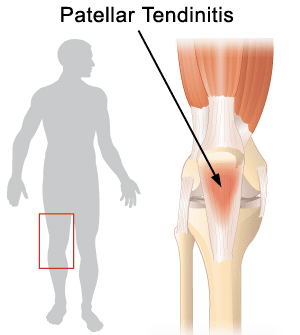
Jumping sports (such as basketball and volleyball) put a huge load on the kneecap and attached tendons. Signs and symptoms of patellar tendonitis include pain to touch directly on the patellar tendon and occasionally, swelling. Treatment includes activity modification, and physical therapy.
Request an Appointment Call Myrtle Beach Call Murrells Inlet
Sinding-Larsen-Johansson is a specific disorder of the patellar tendon where it attaches to the base of the kneecap. In contrast, Osgood-Schlatter disease is a disorder of the tendon where it attaches at the tibial tuberosity of the leg. Both are common disorders in maturing teens. Treatment includes activity modification, physical therapy, and rarely surgical excision of the associated necrotic debris.
Possible Treatments
- Aerobic/Endurance Exercise
- Core Strengthening
- Cryotherapy or Cold Therapy
- Electrotherapeutic Modalities
- Gait or Walking Training
- Iontophoresis
- Knee Active Range of Motion
- Knee Joint Mobilization
- Knee Passive Range of Motion
- Knee Resistive Range of Motion
- Plyometrics
- Proprioceptive Neuromuscular Facilitation (PNF)
- Proprioception Exercises
- Physical Agents
- Soft Tissue Mobilization
- Stretching/Flexibility Exercise
Possible Treatment Goals
- Improve Balance
- Decrease Risk of Reoccurrence
- Improve Fitness
- Improve Function
- Improve Muscle Strength and Power
- Increase Oxygen to Tissues
- Improve Proprioception
- Improve Range of Motion
- Self-care of Symptoms
- Improve Tolerance for Prolonged Activities
Additional Resources
More Knee articles
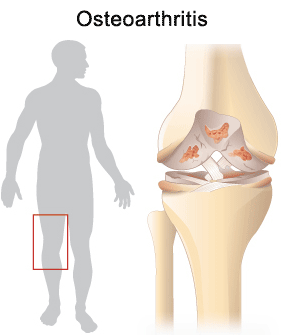
Knee Osteoarthritis
Osteoarthritis of the knee occurs when the cartilage coverings on the end of the femur and the top of the tibia wear out.
Read the article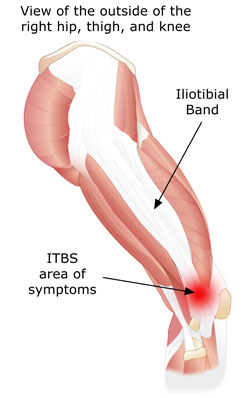
Iliotibial Band Friction Syndrome (ITBS)
The iliotibial band (ITB) is a long, flat and strong tendonous structure that originates from both the gluteus maximus and tensor facia lata (TFL)…
Read the article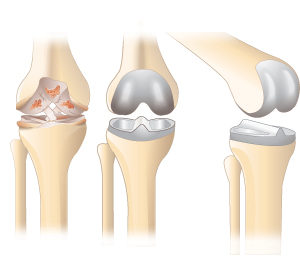
Knee Replacement
Joint replacement is becoming more common, and hips and knees are the most commonly replaced joints.
Read the articleDisclaimer
The information in this medical library is intended for informational and educational purposes only and in no way should be taken to be the provision or practice of physical therapy, medical, or professional healthcare advice or services. The information should not be considered complete or exhaustive and should not be used for diagnostic or treatment purposes without first consulting with your physical therapist, occupational therapist, physician or other healthcare provider. The owners of this website accept no responsibility for the misuse of information contained within this website.